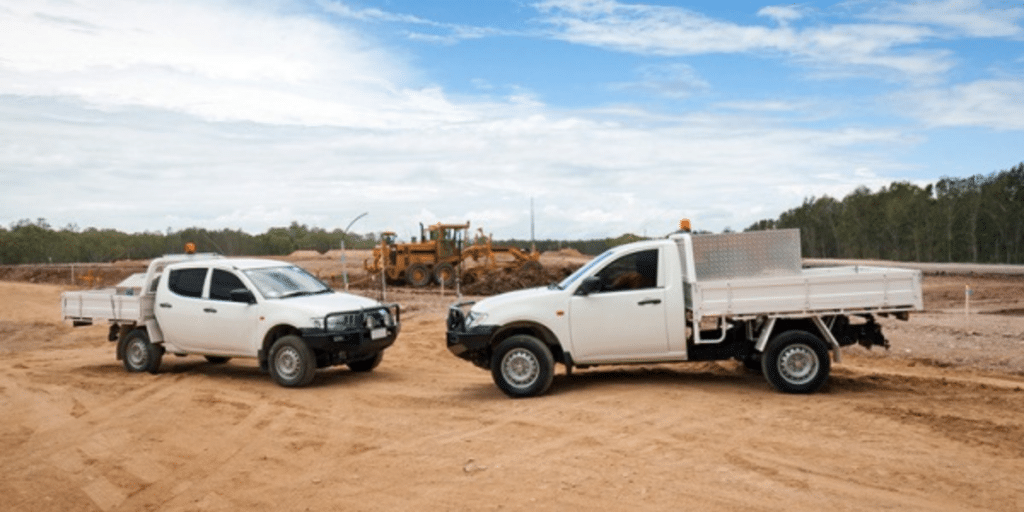
Businesses can currently claim a tax exemption on work Utes and even Vans, but the ATO is cracking down on their private use. The popularity of many purchasing Utes & Vans has sparked a closer look by the Australian Taxation Office which could cost businesses thousands of dollars a year – and force tradies to reimburse their bosses for the extra tax.
We asked Moore Lewis & Partners Director, Ian Lewis, to give us the rundown of what the requirements and implications are:
Q: Ian, How are businesses currently able to claim a tax exemption on work Utes and Vans?
IL: Businesses can claim a tax exemption if a car is provided to an employee as part of their job, with the condition that private use is limited, such as commuting to and from work.
Q: What is the issue the ATO is addressing regarding the use of these vehicles?
IL: The ATO suspects that many individuals are using these vehicles for both work-related and personal purposes, which could trigger tax implications.
Q: What is the potential tax liability for dual cab Utes or Vans that do not meet the criteria for limited private use?
IL: If a dual cab Ute’s use doesn’t align with the conditions of limited private use, it qualifies as a car fringe benefit, subject to fringe benefits tax (FBT).
Q: How might this affect construction businesses and tradies in particular?
IL: Construction businesses that were previously exempt from certain taxes might now face substantial annual tax liabilities. In cases where employees, like tradies, use these vehicles privately, they may be required to reimburse their employers for the additional tax costs.
Q: What can businesses do to mitigate potential FBT liabilities?
IL: It is advisable for businesses to include provisions in employment contracts that allow for the reimbursement of any FBT costs by employees in the event that unauthorized private use of a company-provided vehicle results in FBT ineligibility.
Q: Does this apply to all vehicle arrangements, or are there exceptions?
IL: The current guidelines primarily consider FBT in the context of employers providing vehicles to employees. Other arrangements, such as sole traders or employees using their own Utes for work purposes, are not covered in the same way.
Q: What triggers the potential application of FBT to Utes and Vans?
IL: If a Ute or Van is used for weekend trips or exceeds 750 kilometers a year in private trips, it may become subject to FBT. Essentially, you can drive to or from work but you can’t be using it to go fishing every single weekend or to go and use it as your personal car.
Q: How can businesses protect themselves from potential scrutiny by the ATO?
IL: The emphasis is going to be on employers, they’re going to have to show they’ve got policies where they actually enforce restrictions on the use of the vehicles, ensuring vehicles are only used for work-related purposes.
Maintaining detailed documentation, including logbooks, is essential to demonstrate that all vehicles are primarily used for work purposes. This evidence should be readily available in case the ATO conducts an audit. Staying informed and transparent about tax obligations is crucial.